Integrations, not features, make or break your stack
Every helpdesk demos the same features. What actually decides a support tool's value is whether it connects to the systems you already run — so evaluate the API first and the feature list second.
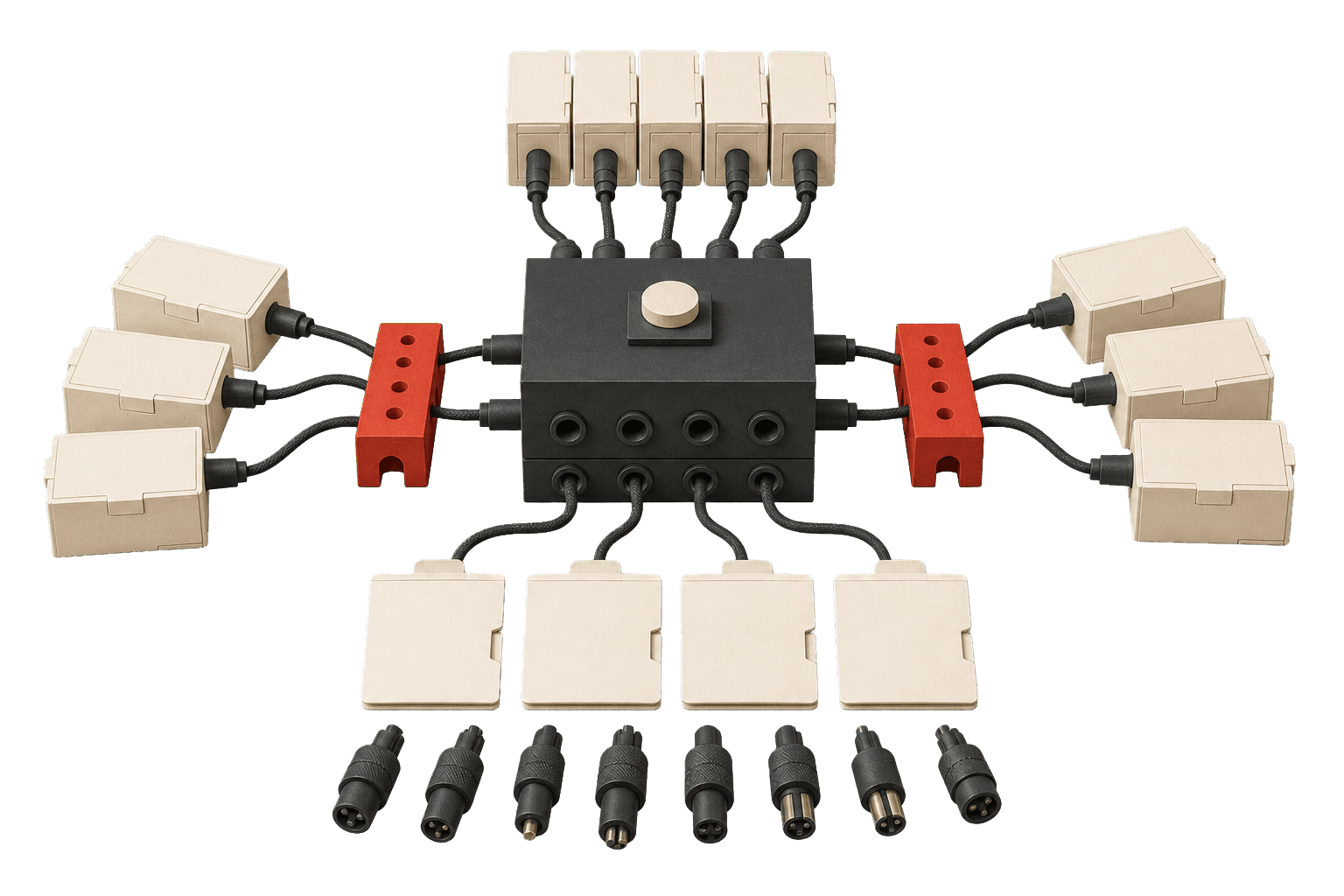
The vendor demo is engineered to make you fall in love with features. A slick macro builder, a sentiment dashboard, an AI reply that drafts itself in the agent's voice. Every serious helpdesk now ships a version of all three, which is precisely why none of them decides anything. Feature parity is a commodity. What actually determines whether a support tool earns its price is far less photogenic: whether it connects — cleanly, reliably, in both directions — to the three or four systems your team already lives in. The CRM. The billing platform. The order database. The identity provider.
That is the part the demo skips. It is also the part that breaks.
Your stack is already a pile of islands
Every buyer is walking into the same reality: a lot of software, almost none of it talking to itself.
An un-integrated tool is not a cheaper version of an integrated one. It is a data-entry job wearing a SaaS logo — someone copying the order number from one tab into another, reconciling two customer records by hand. And the bill for that friction is not hypothetical.
That is what "we'll integrate it later" actually costs, spread across a year of manual reconciliation and stalled projects. It almost never shows up in the tool's business case, because at purchase time the integration is still a promise on a slide.
The value leaks at the agent desktop
Zoom from the enterprise down to one agent on one ticket and the cost turns physical. When systems don't share context, the human becomes the integration layer — pasting, alt-tabbing, re-typing.
That is the toggling tax, and it is paid in the one place customers feel: time to resolution. It also lands on them directly. Nobody experiences your architecture; they experience being asked to repeat an account number to the third person in one conversation.
Delivering genuine omnichannel support — rather than a row of channel logos on a pricing page — is an integration problem, not a feature problem. The chat widget is easy. Making chat know what the phone call an hour ago was about is the hard, valuable part, and it lives entirely in how the systems are wired together. To assess that friction before you buy, use the support tooling field guide.
Features are what a tool does in the demo. Integrations are what it does on Monday morning.
Evaluate the API, not the logo wall
So the honest way to evaluate a support tool is to inspect its API integration surface first and its feature list second. A wall of partner logos tells you a tool can connect; it never tells you what that connection does. A "Salesforce integration" can mean a deep bi-directional sync or a link that opens Salesforce in a new tab. The questions that predict value are unglamorous. Does it expose the objects you need over a documented REST API? Does it fire webhooks on the events you care about, or force you to poll for them? What are the rate limits, and do they survive your peak hour? Can it write back, or only read? Is there a real sandbox to test against?
This matters more now, not less, because the whole industry is betting on automation — and automation starves without connected data.
An AI agent can only resolve what it can reach. Point it at a knowledge base and it answers policy questions; wire it into billing and order systems through real APIs and it can issue the refund, change the address, resend the receipt. The entire distance between those two products is integration — and pricing is starting to say so out loud.
Outcome-based pricing only pays off when the bot is connected deeply enough to produce outcomes. Bolt a per-resolution meter onto a tool that can't reach your systems and you have bought an expensive way to deflect nothing.
Buy the integration surface
Invert the demo. Before the feature tour, hand the vendor your two ugliest workflows — the escalation that touches billing, the refund that touches the order system — and ask them to build both in a trial, against your sandbox, with your data. What connects easily is real. What needs "professional services" is a future line item. What "isn't supported yet" is the reason you will run this same evaluation again in two years.
Features win the demo; integrations win the renewal. Price the integration work alongside the contract with the support tooling decision framework.