The escalation handoff: where AI-to-human breaks
AI now absorbs the routine, so the tickets that reach a human are the hard ones — and the moment of transfer is where context dies and customers start over.
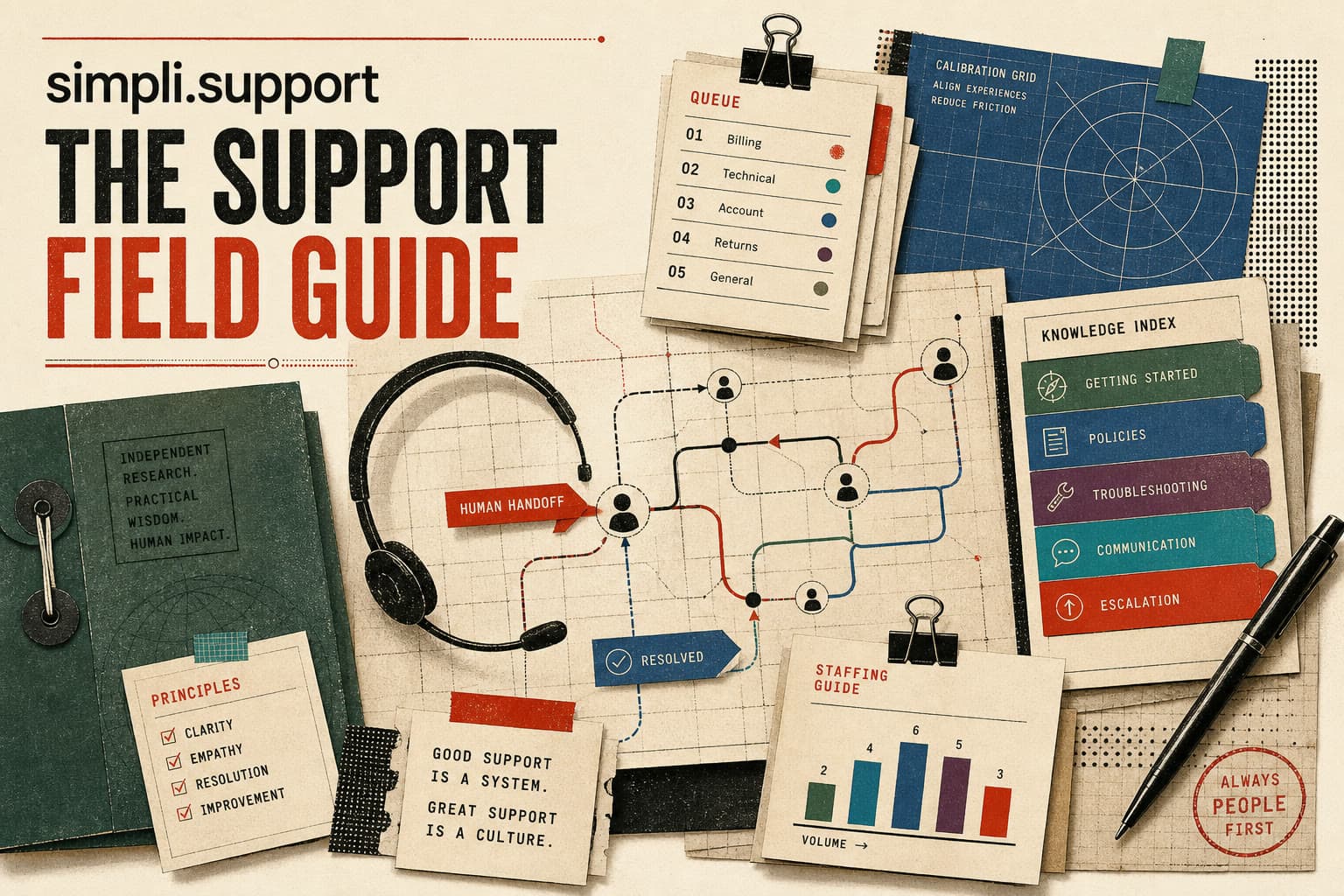
You have just spent nine minutes with a chatbot. It checked your order, ruled out two things, and finally decided it couldn't help: "Let me connect you to an agent." A human appears. "Hi, thanks for reaching out — how can I help you today?" And you are back at the start, typing your order number for the second time, re-explaining the problem you already explained, wondering what those nine minutes bought you.
That seam — the moment the AI hands you to a person — is where most "AI in support" quietly breaks. Not in the bot's answers. In the transfer. And it matters more every quarter, because the handoff is becoming the narrow gate that every hard case has to pass through.
If AI absorbs the routine, then what reaches a human is, by definition, the residue: the angry, the ambiguous, the account-specific, the ones no bot could close. And even the best autonomous systems don't close everything.
At the frontier of autonomous resolution, then, roughly a third of conversations still cross over to a person. The handoff isn't an edge case you can defer until next year. It's a core interface — and most teams have never actually designed it.
Pass context, not a transcript
The laziest handoff dumps the full chat log into the agent's sidebar and calls it context. No agent reads a nine-turn transcript while a customer waits. What survives a good handoff is a structured summary a human can absorb in five seconds: the customer's intent in one line, what the AI already verified (identity confirmed, order #4471 located, refund policy checked), what it tried, and the one unresolved question. If the bot collected an order number, the human should never ask for it again.
Making the customer repeat themselves is the most avoidable failure in the entire AI-to-human chain — and the one teams ship most often.
Tell the customer the truth about the transfer
Handoffs break trust when they pretend to be seamless. A customer who has been talking to a bot knows they were talking to a bot; the pretence that a human was there all along fools no one and faintly insults everyone.
People increasingly expect to know when AI is involved and why it made the call it made — including the call to escalate. "I'm bringing in a specialist because this needs an account change I'm not able to make" is a better handoff than a silent transfer, because it frames the escalation as a decision rather than a dead end. And this isn't a courtesy with a short shelf life.
Design the agent's side, not just the customer's
The handoff has two victims, and the second is your own agent. When internal tooling drops a raw transcript with no summary, no verified facts and no suggested next step, agents route around it — pasting the conversation into whatever outside AI tool they trust to summarise it.
That surge in unapproved tooling is a symptom, not a mutiny. Agents reach for shadow AI when the official handoff makes their job harder instead of easier, and every paste sends customer data somewhere you don't control. A handoff that arrives pre-summarised, with the customer's details intact and a reply already drafted, is the fix — and it keeps that data inside your walls.
Instrument the seam
Most teams measure the bot (containment, deflection) and measure the agent (handle time, CSAT) and never measure the thing in between. The questions that matter live in the seam. What share of escalations arrive with a usable summary? How often does the customer repeat something the AI already had? How does CSAT for handed-off conversations compare with AI-only and human-only ones? When handed-off tickets score worst — and they usually do — that isn't difficult customers. That's the seam leaking.
The handoff is not plumbing. It's the moment your customer decides whether "we use AI" meant "we made this faster" or "we made you tell your story twice." Design it like the interface it is: context that survives the transfer, an honest sentence about why the escalation happened, and an agent who opens already knowing what's going on. Get the seam right and autonomous resolution earns its keep on the cases it can close, while the ones it can't still land softly. For where escalations should route once they cross over, see tiers vs. swarming; for why the cases that reach a human are the expensive ones, read the real cost of a ticket.