The support career ladder, mapped
Frontline support has a ladder — it is just badly drawn. Here are the real paths up and out: senior IC, QA, ops, CS, and management, and where each one breaks.
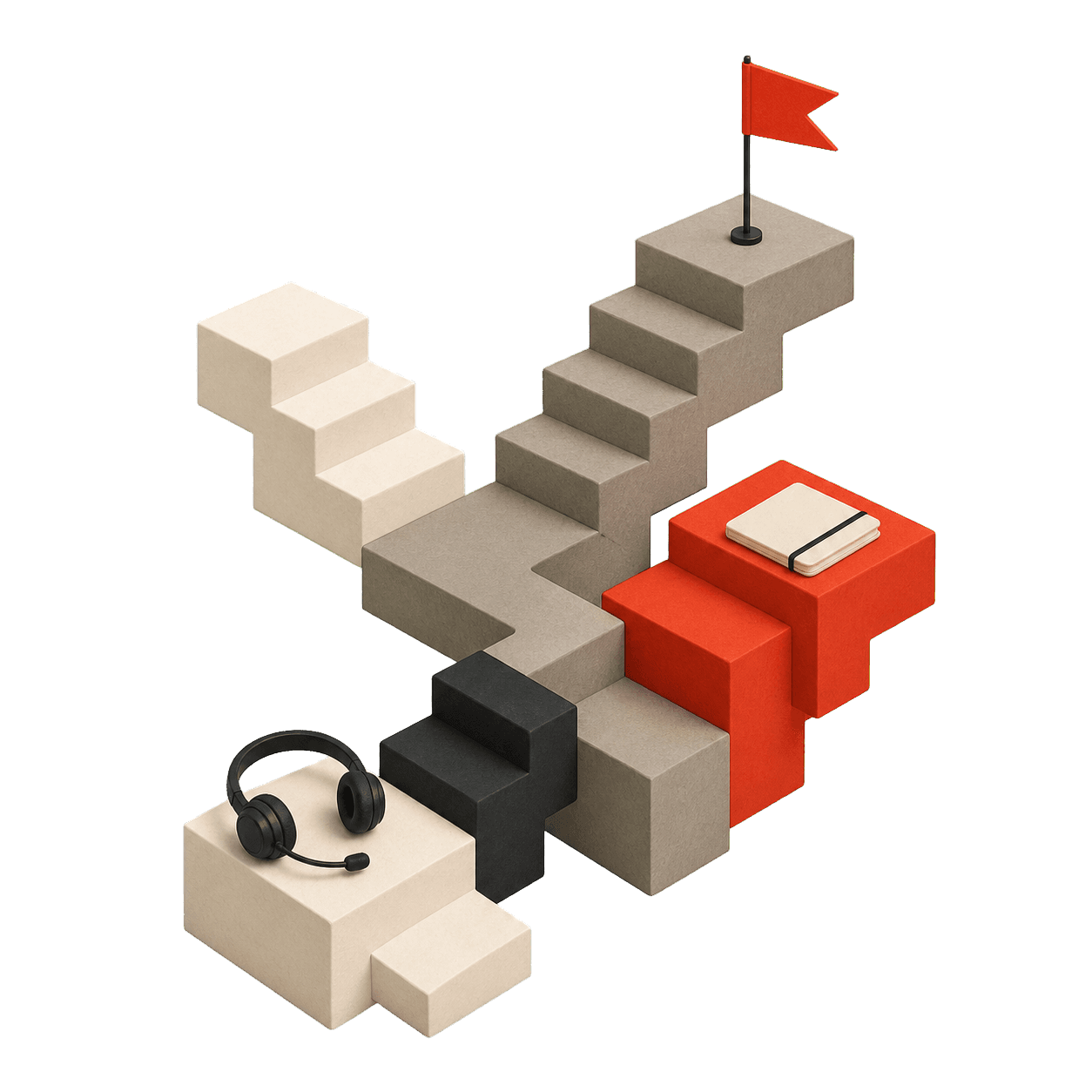
You have the "so what's next for me?" conversation every year. Your lead nods, says you're doing great work, floats "senior" as a someday word, and the meeting ends without a single concrete rung named. Frontline support is one of the few jobs where the thing you're good at — clearing the queue — is also the thing that keeps you exactly where you are.
The ladder does exist. It's just badly drawn, and most of it points away from the queue rather than straight up from it. Here's the real map.
The starting rung is lower than the ceiling suggests
The average US support rep earns
, which sets the floor everyone is trying to climb off. It also explains the churn: nearly a third of contact-center agents say they'll be gone within six months
, and among under-35s that share is far higher than for older colleagues. People don't leave support because they hate customers. They leave because they can't see the next rung.
So where do the rungs actually go?
Path one: the senior IC
The most natural move is to get deeper, not wider — become the person who owns the gnarly escalations, the billing edge cases, the integration nobody else understands. This path is more viable than it used to be. As automation eats the simple tickets, the human queue is getting harder: nine in ten CX leaders say the contacts that now reach a person are more complex than before